How a Closet and a Camera Made Me a Better Writer
When I let people know I’m a retired military officer, the most common response I get is “Thank you for your service.”
That seems to be the reflex. I’m a retired U.S. Air Force lieutenant colonel with 24 years under my military belt. Up front, I’d spent three years as an enlistee, a civil-engineering carpenter/bricklayer (attaining the rank of senior airman), followed by twenty-one years as a commissioned officer.
I do appreciate the thank-you, though it seems undeserved. Millions of men and women have made the same commitment through the decades. Every one of them has a story.
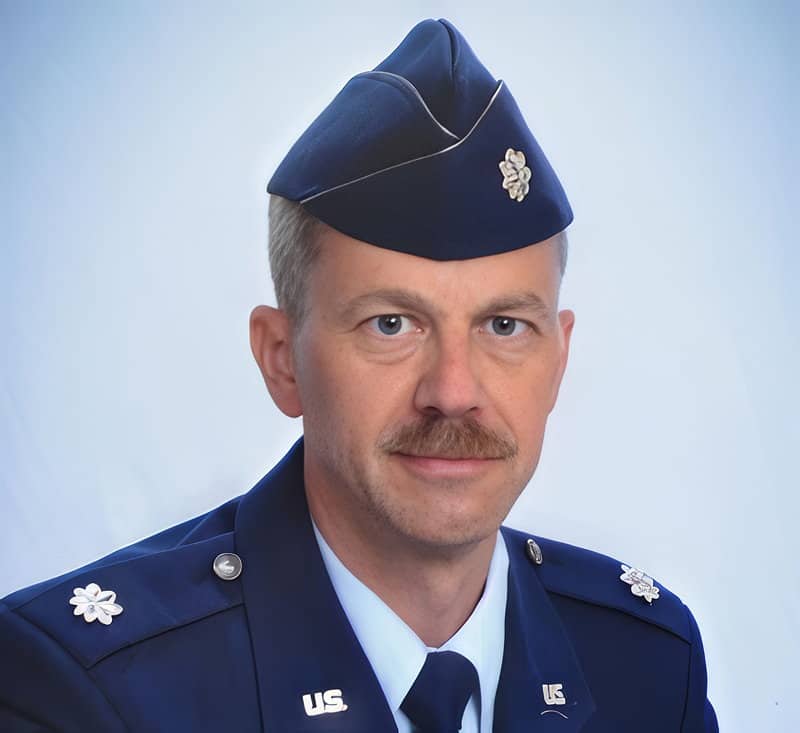
Author, retired US Air Force photojournalist, Richard Compson Sater, in uniform.
Mine has something to do with the second-most frequent remark I get when I let people know I’m retired from the Air Force, which is “What did you do?” I generally report spending most of my career as a photojournalist, but it’s actually not a specialty in any branch of the military. I managed to carve out such a career on the sly, in spite of the Air Force – and, perhaps, in spite of myself, a closeted gay man working undercover – posing for all the world as a “straight” airman during a time that homosexuality was specifically prohibited as being at odds with military service and morale.
As it happened, I spent my entire career in the closet. It was a tricky place to hide and not without risk, but I was sure that being vigilant would keep me out of trouble. I learned to laugh along with everyone else at the fag jokes and gay slurs. I willingly traded the lie for the opportunity to serve and have never regretted it.
In 1989, I was commissioned into public relations. I was sent the following year to the Defense Information School (DINFOS), a joint-service technical college designated as “the premiere learning institution for communication across the Department of Defense.” At that time, it was located at Fort Benjamin Harrison, Indianapolis (which has since closed). My unit of assignment was also in Indiana, Grissom Air Force Base; we flew fighter aircraft.
Email, digital photography, and even word-processing on a computer were still in their primitive stages in 1990. At school, we wrote our stories on typewriters and took photographs on film that we processed and printed in a darkroom. During a semester, we acquired the skills necessary to helm an office designed to publicize the military mission, interacting with professional media outlets, community organizations, and our own personnel, sharing the story via news releases and features or one-on-one events – inviting media or civic leaders to our installation to show and tell.
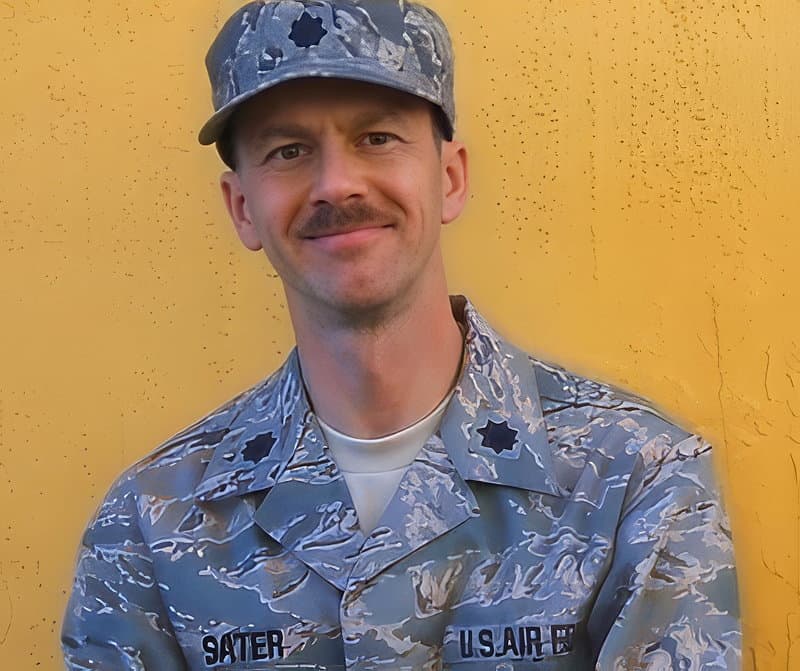
That three-prong mission – media relations, community relations, and internal information – was my day job. But the skills that truly captured my imagination were journalism and photography. I excelled in those particular areas, graduating with honors and a “J” score of 100%. My instructor, a crusty U.S. Marine Corps gunnery sergeant, told me that my writing – particularly for feature stories and editorials – was as creamy and delicious as butter.
Back home at my unit, I put those skills to good use. Often, the stories I wrote were simply run-of-the-mill news releases about changes of command, unit exercises, or updates about the mission or aircraft that were mailed (later, faxed and emailed) to local and state media outlets. On rare occasions, there were heartbreaking stories to report about aircraft crashes or other such tragic accidents or unpleasant incidents. But what I loved best were the feature stories with accompanying photographs.
As editor and primary writer for my unit’s monthly news magazine, I had the last word on what appeared in print, and I took advantage. I learned early on that there were two distinct types of features: the sort where I interviewed those who participated in an experience, and the (better) sort where I actually participated and wrote a first-hand account.
People love to talk about what they do, particularly if they enjoy it. People also love for you to ask, “Will you show me how to do that?” My curiosity and willingness to participate rather than simply report after the fact got me into a fire-resistant suit with a breathing apparatus to follow firemen into a burning house. It put me in the pilot seat of a Navy aircraft and an excavator on a road project in Alaska. It had me digging wells with Navy Seabees in the Philippines. It found me in the middle of a team doing a security patrol at night in Kabul, Afghanistan. I learned to weld. Helped a mechanic fix a Humvee. My willingness to volunteer for new adventures earned me four combat tours and travel to every continent but Australia. (You want to know how cold you get in Antarctica?)
My reporting and photos from Ground Zero – the World Trade Center attacks of September 2001 – earned me an Air Force Photojournalist of the Year award.
I viewed my other public-relations responsibilities as unavoidable delay, chores to tolerate so that I could scratch my photojournalistic itch. Even during overseas deployments in support of Operation Enduring Freedom-Philippines, Operation Northern Watch-Turkey and the Multi-National Division in Bosnia and Herzegovina, I managed to devote considerable time to reporting and writing features stories about the mission and the people accomplishing it, in addition to carrying out my required duties – conducting press briefings, writing speeches, preparing publicity plans for various operations or contingencies, hosting high-profile media visits, and attending endless meetings. Some of my best writing came from those times.
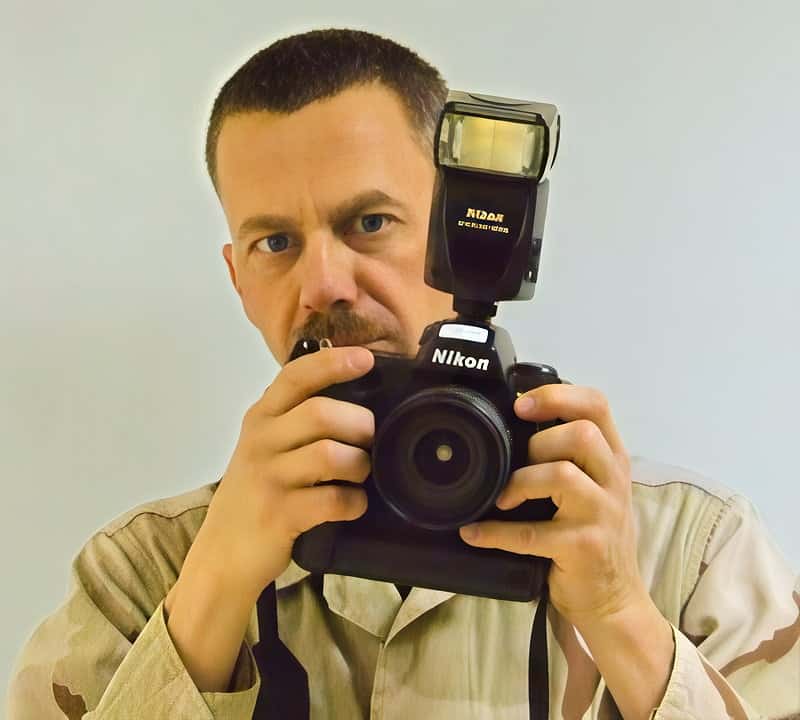
I love telling stories. I’d earned a bachelor’s degree and a master’s in creative fiction writing before being commissioned. My first novel, RANK, took shape during an extended tour of duty in Afghanistan. We were working seven days a week, twelve to fourteen hours a day, and then we’d retire to our cramped quarters after dark. I needed something to do to decompress. The story of RANK – a young Air Force lieutenant who serves as a general’s aide, falls hard for his boss – came together quickly. I could write as an escape for an hour or two before turning out the lights.
RANK wasn’t actually published until 2016. The “don’t ask, don’t tell” policy had been implemented under President Bill Clinton in 1993, initially intended as a stopgap … one of his promises before his election was that gay men and lesbians would be able to serve openly. DADT was supposed to be a bridge to keeping that promise. In fact, it wasn’t scrapped until 2011 under President Barack Obama, by which time I was already retired from the Air Force. I never had the satisfaction of coming out while in uniform and introducing my life partner (later spouse) to my colleagues in uniform, though he was a proud possessor of a military-spouse I.D. card later.
I’m not sure what I’d do if I didn’t have writing as an outlet. I remain grateful for my time in the service for making me the writer I am today. I regularly draw on my military adventures when writing new fiction. You know that certain Air Force captain, upon whom I had a deep and serious crush in 1990? He’s the love interest in my latest novel in progress, while the narrator of the story is very loosely based on myself … and, finally, that happy ending I lusted after all those years ago will become a reality.

Writing the Lesbian Novel Infraction—without the Word Lesbian

Success! (Eventually)

Stories After Sunset: Writing Gay Life, Aging, and Authenticity

A Writer Ponders and the World Doesn’t Shake

Saved by Storytelling